
Five numbers every dealer principal should see weekly
Five weekly numbers that give dealer principals a quick, practical view of response, bookings, sales pipeline and aftersales demand.

By Monday morning, most dealer principals already have too much on their plate. The problem is not a lack of data. It is knowing which few numbers tell you where attention is needed before a small issue turns into a lost sale or a missed booking.
A useful weekly view should be quick to scan and easy to act on. If a number moves the wrong way, you should know who needs to look at it and what they should check first.
These five numbers do that job well. They will not tell you everything about the business, but they will tell you where to start asking better questions.
1. Lead response time
The first number is lead response time. If new enquiries are sitting too long before a proper reply, every other performance metric gets harder to improve.
When response time slips, check channel coverage first. Unanswered website leads, out-of-hours WhatsApp messages and missed calls often point to the same issue: nobody owns the first reply across every channel.
2. Contact rate
The second number is contact rate. This is the share of enquiries your team actually reaches and starts a real conversation with, rather than just sending a template and hoping for the best.
If contact rate drops, look at message quality and timing. Are replies too generic, too slow, or sent when customers are unlikely to answer?
3. Appointment conversion
The third number is appointment conversion. This tells you how many live conversations become a booked showroom visit, test drive, service booking or appraisal, depending on the team you are reviewing.
If bookings soften, listen for friction in the handover from chat to diary. Customers drop away when they have to repeat themselves, wait for someone to call back, or get offered times that do not suit them.
4. Appointment show rate
The fourth number is appointment show rate. A full diary can look healthy on paper, but no-shows hide poor confirmation, weak reminders or bookings that were never very firm in the first place.
When show rate falls, check the reminder journey. Clear confirmations, easy rescheduling and a simple message on the day usually tell you more than a longer weekly report ever will.
Good reporting should shorten Monday's meetings, not lengthen them.
That is why we send every customer a Your week in Fuzey report. It is a one-page view of the week just gone, built so a dealer principal can take in the headline numbers at a glance before anyone opens a spreadsheet.
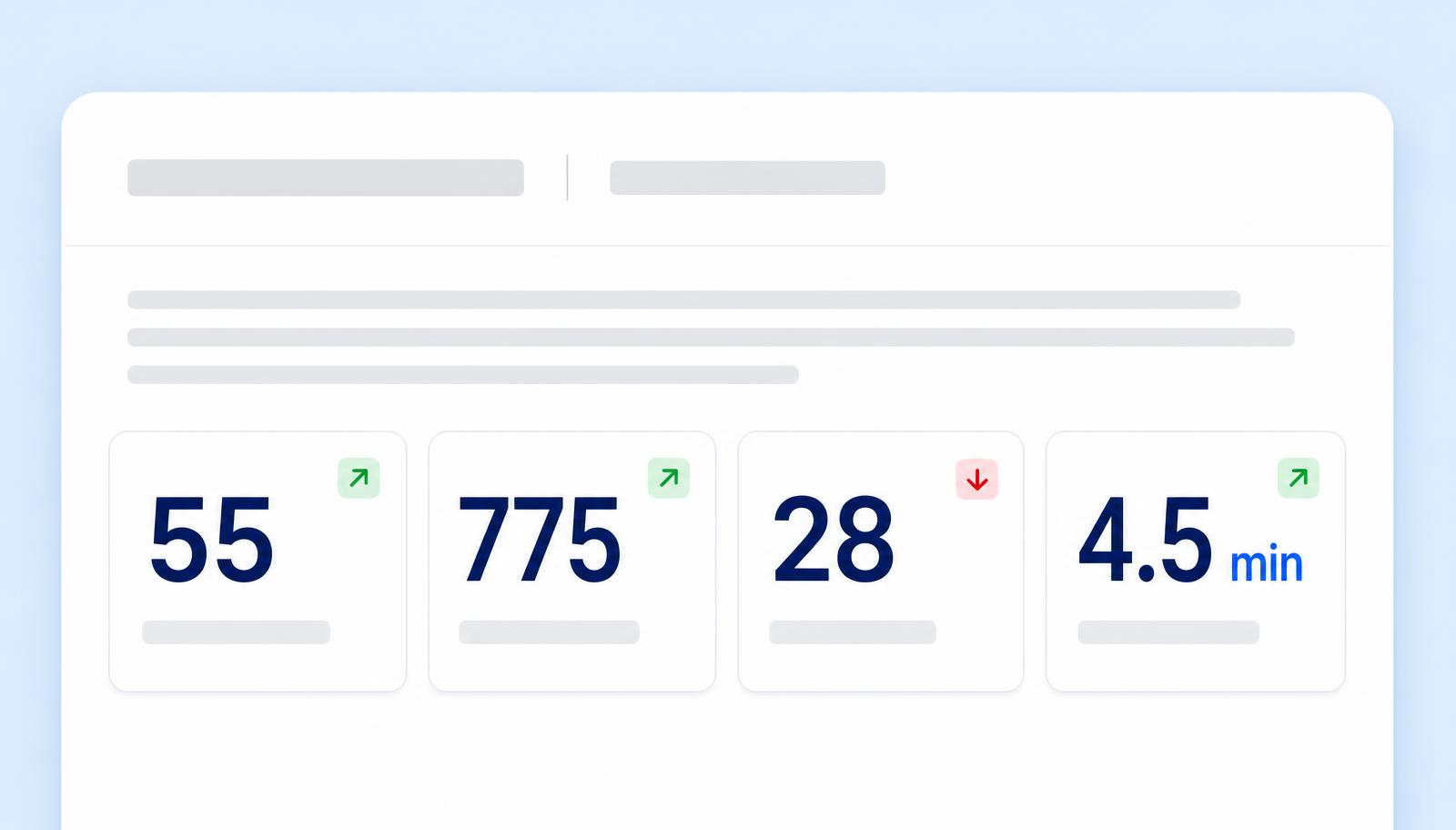
It maps onto the five numbers above. Median reply times across AI and team replies cover speed. Conversations answered and replies received cover contactability and contact rate. Bookings traced back to a Fuzey journey cover appointment conversion and outcome rate, broken down by site so you can see which teams are converting and which need help.
5. Outcome rate
The fifth number is outcome rate, measured in the way that fits the department. For sales that may be enquiries to sold, or appointments to sold. For aftersales it may be conversations to bookings completed.
If outcome rate weakens while response and booking numbers still look fine, the issue is rarely volume. It is more likely to be quality of follow-up, stock fit, pricing conversations, or how well customer context is carried through the journey.
Alongside the five headline numbers, keep one eye on workload by channel. You do not need a long list here, just enough to spot whether one team is drowning in messages while another has capacity.
That matters because strain shows up before poor results do. Messages get shorter, handovers get messy, and opportunities that looked healthy on Friday disappear by the next week.
Make the Monday glance useful
The point of a weekly dashboard is not to catch people out. It is to spot movement early, ask the right follow-up question and remove blockers quickly.
Keep the view consistent from week to week. If every site and department reports the same core numbers in the same way, trends become easier to trust and easier to act on.
This is where a shared view across calls, web chat, WhatsApp and bookings helps. Fuzey brings those conversations and outcomes into one place, so the Monday glance is based on what customers actually experienced, not on disconnected reports.
If your weekly numbers are simple, visible and tied to action, they become more than reporting. They become a habit that keeps teams focused on the basics that move the business, and that is exactly where Fuzey fits best.
See how Fuzey works for dealerships
One shared number, AI that answers, and every conversation in one place across sales and aftersales.
Keep reading

Choosing a Keyloop approved partner for customer messaging
What Keyloop approved partner status actually means, the questions to ask a messaging vendor, and how to judge the data and consent side before you sign.
Read article
Reading the room at scale
In-depth customer sentiment reviews show dealerships what keeps coming up, what customers love and what they complain about, straight from everyday conversations.
Read article
The post-campaign report
What a dealer group should expect after a campaign, from delivery and replies to bookings, revenue and the actions that come next.
Read article